
Research
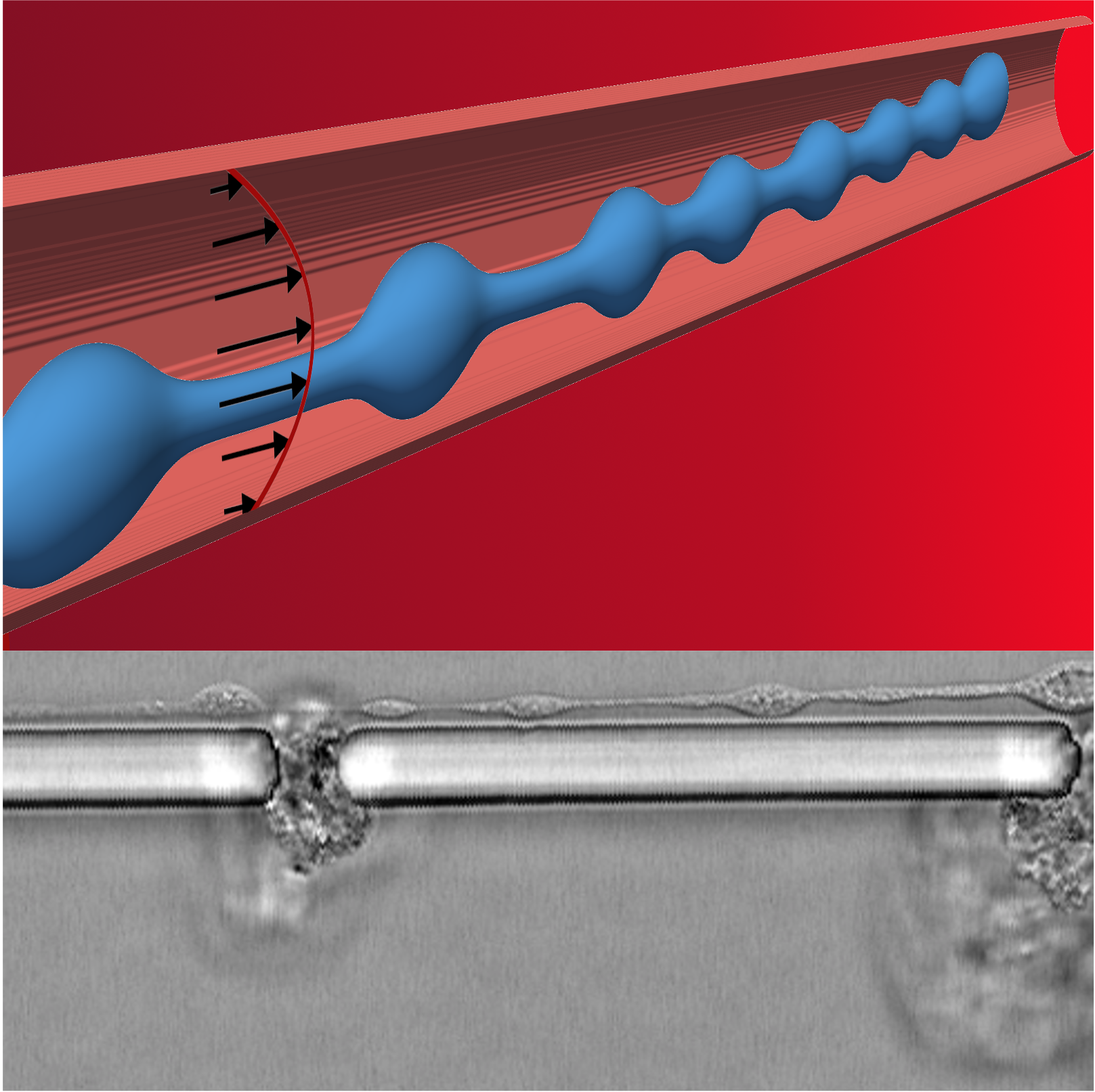

Creation of novel blood platelets via a physical instability in simulation (top) and experiment (bottom).
Fluid physics for biological function
Flows are an essential aspect for all forms of life. With our models, we aim to identify and understand the underlying physical principles how physical flows lead to biological function. Examples include the adaptation of endothelial cells to the surrounding blood flow or the biogenesis of blood platelets via an elastohydrodynamic instability.
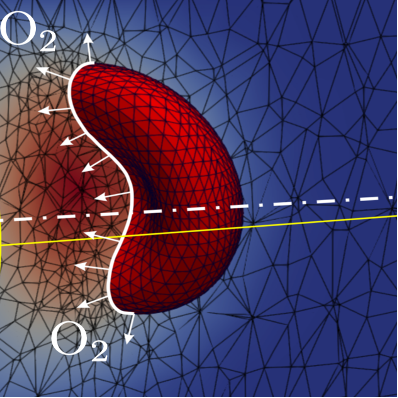
Simulated oxygen release from a red blood cell in flow.
Physics of red blood cells
Although they are one of the simplest cells in the human body, red blood cells exhibit incredibly rich dynamic behavior when they flow through blood vessels. We develop computational models to explore the physics of red blood cells in hydrodynamic flows and its consequencs for physiological function – most prominently the delivery efficiency of oxygen.
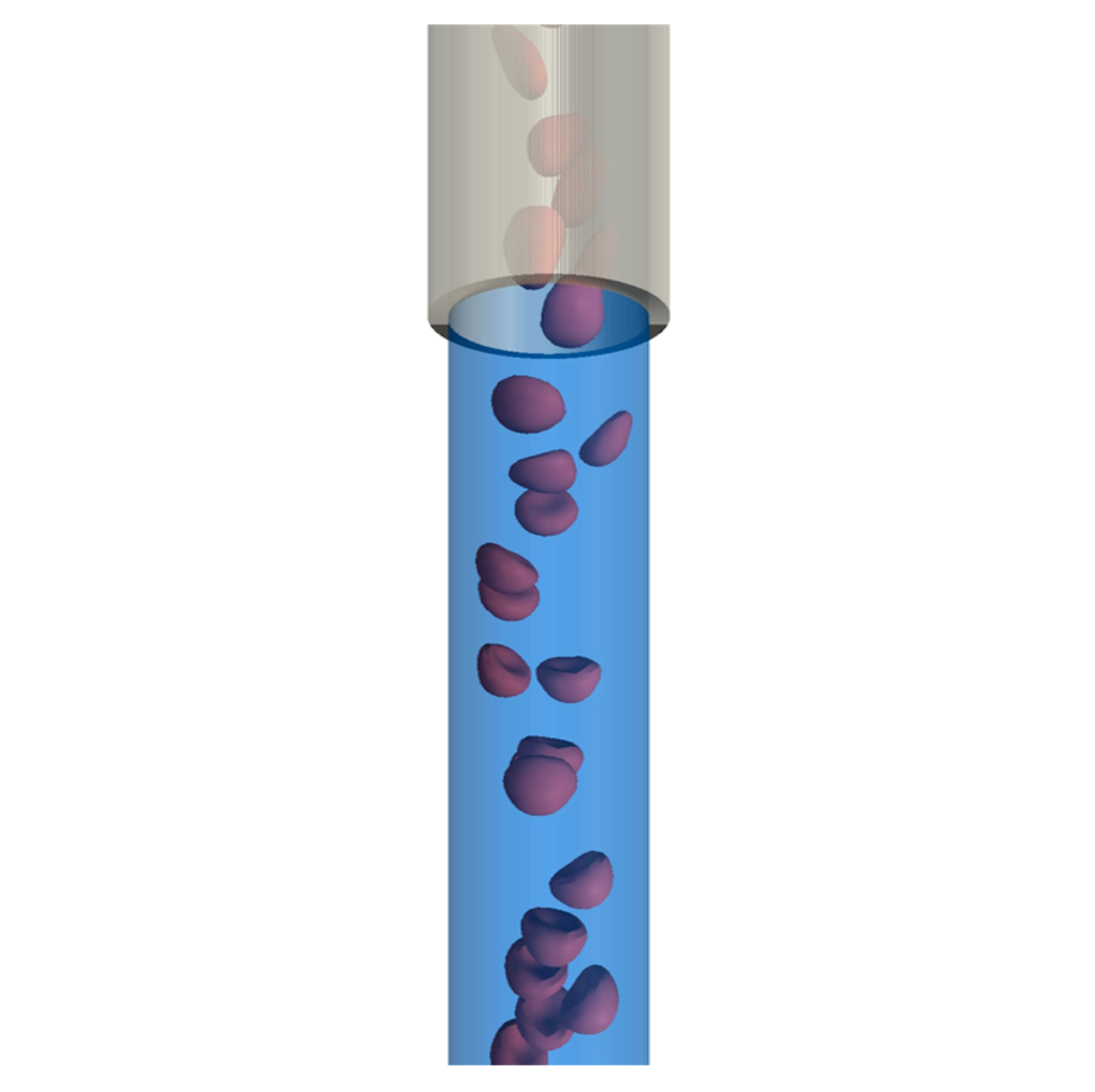
Simulation of cells exiting a printing needle during biofabrication.
Biofabrication
Biofabrication, the 3D printing of living cells, is a fascinating new approach to produce artificial tissues. We develop physics-based computer models (digital twins) to understand in-depth the physics of the biofabrication process and to overcome current obstacles such as the excessive hydrodynamic stresses exerted on the cells during printing.